CELIVION Lin J
Inside the world of biological matrix.
Starting with human acellular dermal matrix: ECM architecture, matrix preservation and particle design.
Meet CELIVION Lin J ↓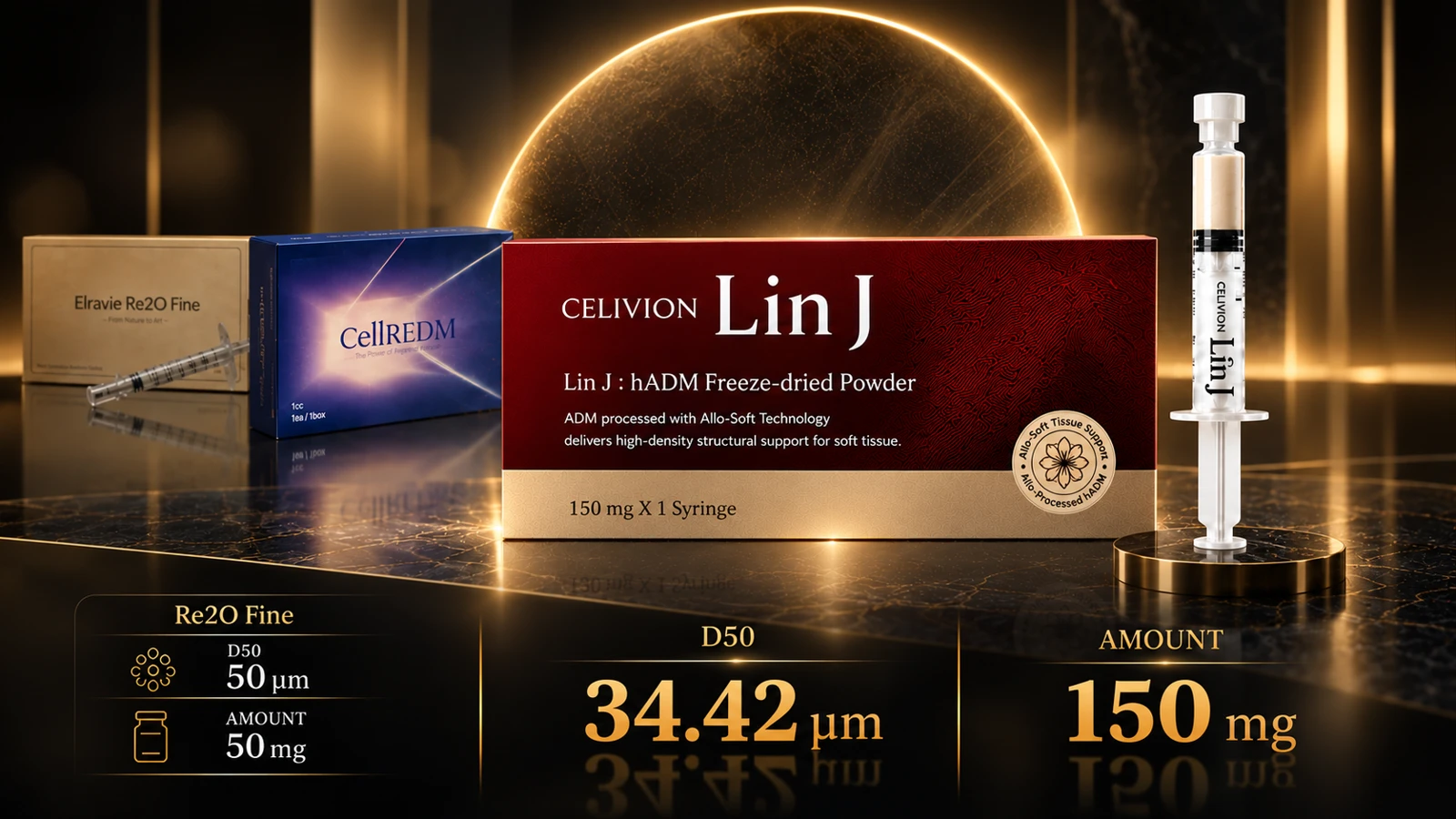
From tissue architecture to particle scale.
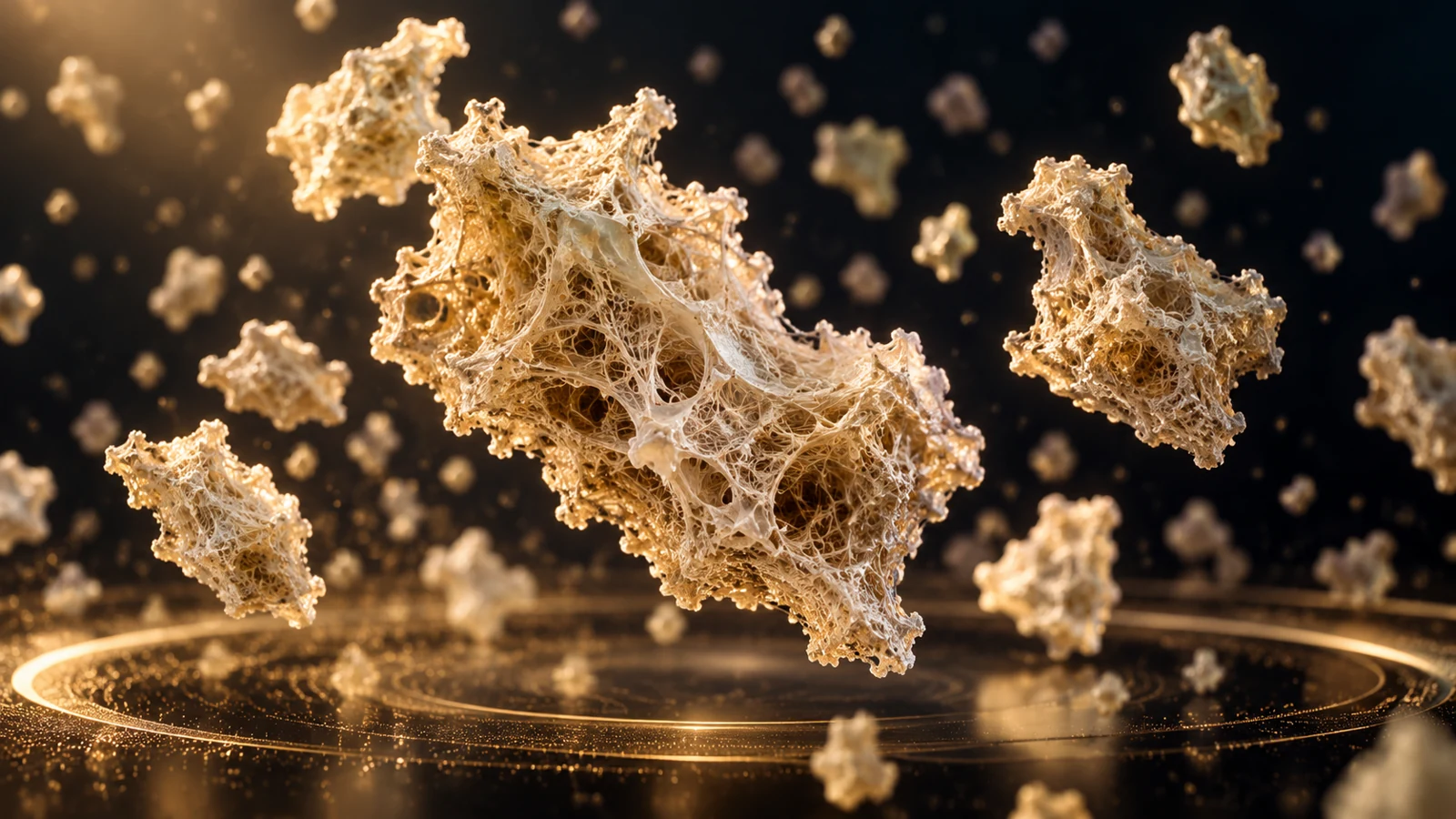
Differences between aesthetic materials begin with the material itself. CELIVION Lin J starts with human dermal matrix: after cells are removed, attention turns to the remaining extracellular matrix and its processing into micronized freeze-dried powder.

- 01 / ORIGIN
Human dermal matrix
Understand material origin, tissue sourcing and traceability.
- 02 / MATRIX
An extracellular network
Collagen, elastin and GAGs provide a multi-component perspective on ECM.
- 03 / PARTICLES
Micronized, freeze-dried
Move from the matrix to average size, D50 and product presentation.
CELIVION Lin J at a glance.
CELIVION Lin J is a freeze-dried powder product based on micronized human acellular dermal matrix (hADM). Its introduction focuses on extracellular matrix (ECM), particle design and processing. Product materials list a 150 mg × 1 syringe presentation and a D50 of 34.42 μm.
- Product
- CELIVION Lin J
- Material
- Human acellular dermal matrix (hADM)
- Form
- Freeze-dried powder
- Listed presentation
- 150 mg × 1 syringe
- Median particle diameter, D50
- 34.42 μm
- Information & collaboration
- Contact HEBE

Start with the material. Discover CELIVION.
From human dermal matrix composition to low-temperature processing and particle design, CELIVION Lin J places the material at the centre of its product introduction. Understanding origin, structure and processing builds a clearer professional perspective.
Meet CELIVION Lin J
CELIVION Lin J is a powder-type product based on micronized human acellular dermal matrix (hADM). Derived from human dermal tissue, hADM is processed to remove cells and fat components while retaining extracellular matrix constituents including collagen, elastin and glycosaminoglycans (GAGs).
Understanding ECM: the structural environment of skin
The extracellular matrix (ECM) is the structural network surrounding cells. Understanding ECM helps explain differences in the composition, structure and processing of aesthetic materials. This material system is central to CELIVION’s product introduction.
The architecture of ECM goes beyond one constituent.
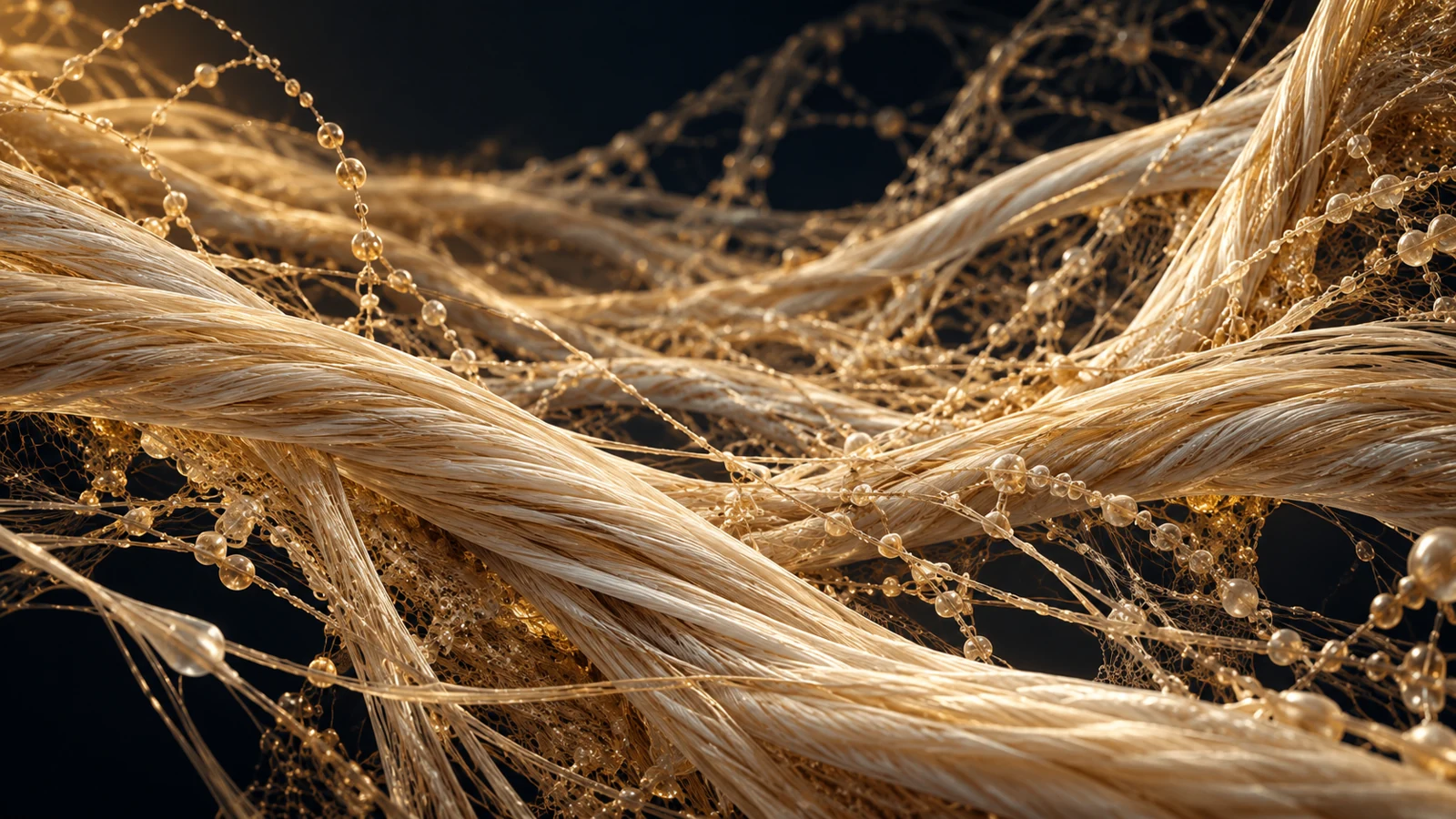
Collagen · Fibrous structure
Collagen is a major structural protein in extracellular matrix. Understanding it means considering fibre form, arrangement and structural characteristics after processing, alongside its name.

Elastin · Network composition
Elastin is another constituent considered in ECM. Its structural role differs from collagen, supporting a multi-component view of dermal matrix.
GAGs · Matrix environment
Glycosaminoglycans are a class of polysaccharides in ECM. They extend the discussion beyond fibres to the surrounding matrix environment, rather than reducing ECM to collagen alone.
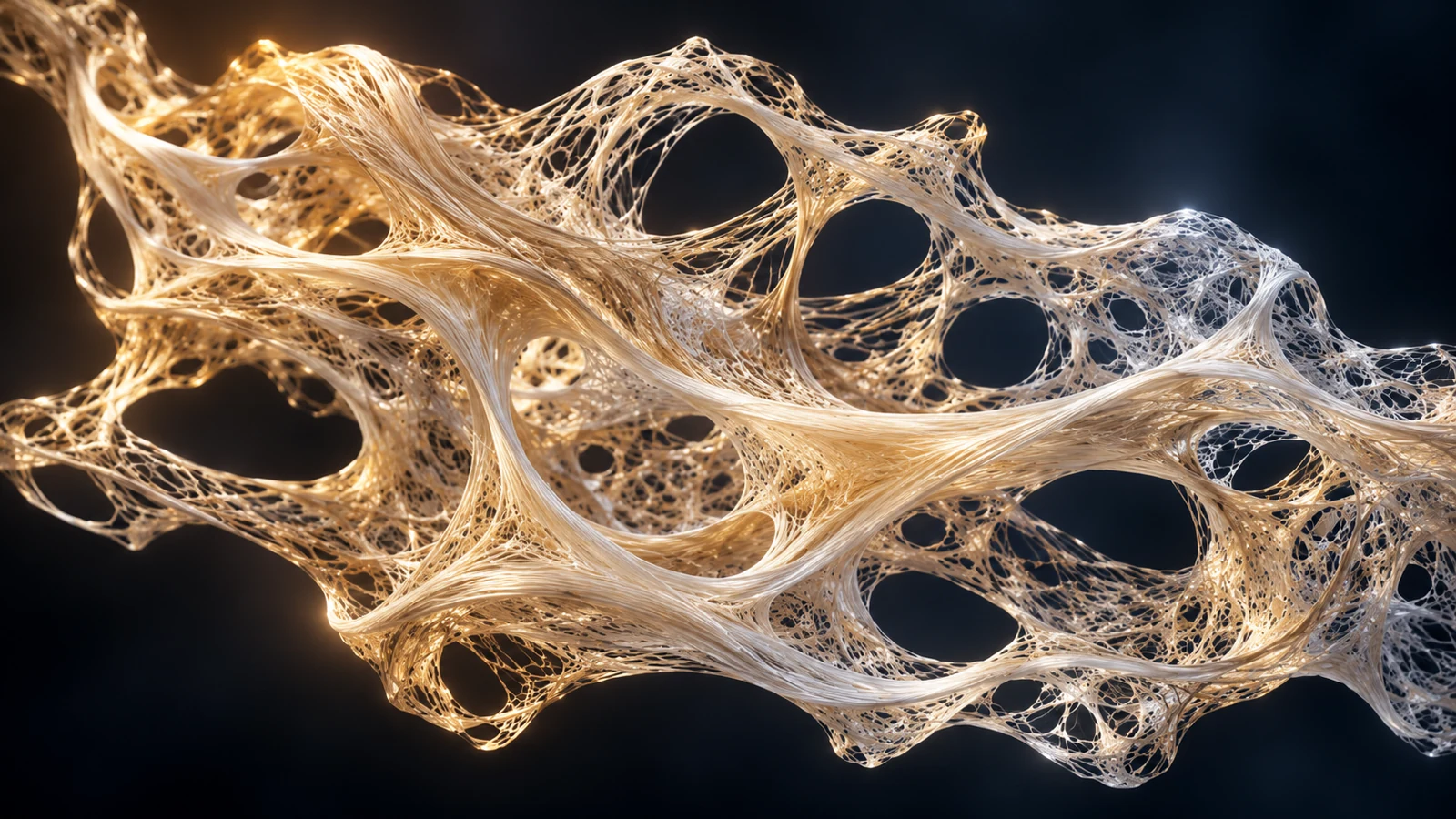
From material to processing.
Allo-PELT™
A processing technology centred on low-temperature treatment and matrix preservation.
ECM Mix Cage™
A technology system focused on particle processing, sizing and ratio control. Material composition and particle design are key elements of the product’s technical introduction.

Follow how the material is handled.
CELIVION’s technology narrative follows two themes: Allo-PELT™ focuses on low-temperature processing and matrix preservation; ECM Mix Cage™ focuses on particle processing, sizing and ratio control. Read origin, processing and final form together.

- 01
Origin
Human dermal tissue and source traceability
- 02
Decellularization
Cell removal with attention to matrix constituents
- 03
Particle design
Processing, sizing and particle distribution
- 04
Freeze-dried form
Presentation and product instructions
A material-reading pathway. Refer to technical product materials for manufacturing details.
Two measures. Two ways to read particle size.
34.42 μm: a starting point for reading particles.
Particle design is not explained by a smaller number alone. Average size describes one statistical characteristic; D50 marks the midpoint of the cumulative distribution. Read the full distribution, processing and requirements for use together.
BIOBIJOU product materials report an average particle size of approximately 33.92 μm and a D50 of 34.42 μm. These are distinct statistical measures: D50 is the diameter at the 50% point of the cumulative particle size distribution.
Source: particle analysis on pages 14–15 of the BIOBIJOU product introduction. Particle size describes material characteristics, rather than individual treatment outcomes.Processing with a focus on matrix preservation.
Allo-PELT™ centres on stepwise low-temperature circulation decellularization, focusing on limiting heat-related changes to matrix structure. ECM Mix Cage™ addresses particle processing, sizing and ratio control. The technologies explain complementary aspects of the processing approach.
What matters when reviewing product information?
- Material origin, composition and product specifications
- Processing methods and particle characteristics
- Product instructions, requirements for use and tissue traceability
- The specific conditions behind research and clinical experience
Two professional perspectives, starting with the material.
Skin quality & ECM support
A professional assessment of skin structure, material distribution and skin quality. The presentation discusses this perspective as Skin Booster, with a focus on matrix support.
Soft volume & contour transitions
Professional planning around subtle volume transitions, tissue structure and contour continuity. This differs from a goal of substantial volumization and requires assessment of the area and material.
These are professional discussion themes from the presentation. Applicable uses and methods depend on product instructions and local requirements.
How do hADM, HA and synthetic material categories differ?
| Material category | Starting point | Professional assessment |
|---|---|---|
| Human dermal matrix (hADM) | A matrix material obtained after decellularization of human tissue, with a focus on ECM composition and structure. | Traceability, processing, particle distribution, instructions and tissue response. |
| Hyaluronic acid (HA) | Hyaluronic-acid-based materials with product-specific crosslinking, concentrations and rheological properties. | The individual product’s properties, intended areas and instructions. |
| PLLA / PDLA / PCL / CaHA | Distinct chemistries and material behaviours; the word collagen does not make these the same material. | Particles, carriers, degradation characteristics and evidence for each product. |
This is a distinction between material categories, rather than a ranking of treatment outcomes.
Four dimensions of a clearer product assessment.
- 01
Goal
Clarify whether the discussion concerns skin quality, structural support or contour transitions.
- 02
Material
Review hADM origin, ECM composition, presentation and traceability.
- 03
Particles
Read average size, D50 and the full distribution together rather than comparing one number.
- 04
Professional assessment
Consider the treatment area, tissue conditions and risk management with a qualified medical professional.
Read product information, experience and research in context.
Particle exploration on slide 6 is a preclinical animal pilot. Slides 9–18 include the speaker’s observations and professional approach. These help frame research questions but do not establish individual outcomes, recovery times or safety guarantees.
- hADM material research · Ko et al., 2023 ↗
A mouse study comparing injectable and sheet-type hADM provides material research context.
- Particulated hADM research · Lee et al., 2026 ↗
A 20-person, 20-week split-face trial used Elravie Re2O. It is not a CELIVION product trial.
Content reference: Understanding hADM in Aesthetic Medicine, professional presentation dated 4 September 2026. Edited by HEBE; updated 17 October 2026.
A closer look at CELIVION.
What is hADM?
hADM stands for human acellular dermal matrix. It refers to processed dermal matrix material, rather than a live-cell product.
How are ECM and collagen related?
Collagen is an important component of ECM. Other constituents include elastin and glycosaminoglycans.
How can I learn about the product and professional collaboration?
Contact HEBE for product information and professional collaboration enquiries. Use must follow applicable local requirements, product instructions and professional medical assessment.
What is CELIVION Lin J?
CELIVION Lin J is a freeze-dried powder based on micronized human acellular dermal matrix (hADM). Product materials list 150 mg × 1 syringe and focus on ECM material and particle processing.
Is CELIVION Lin J hyaluronic acid?
They are different materials. CELIVION Lin J is based on hADM, while HA products are based on hyaluronic acid. Composition and instructions must be reviewed for each product.
Is hADM a stem-cell or exosome product?
No. hADM is processed acellular dermal matrix. It should not be confused with live cells, stem cells or exosome products.
What does D50 34.42 μm mean?
D50 is the diameter at the 50% point of the cumulative particle size distribution. It differs from the average diameter. It describes particles, not duration of results or an independent safety guarantee.
What do Skin Booster and Gentle Volumizing mean here?
The presentation uses these terms for skin quality and ECM support, and for subtle volume support. Actual plans require product instructions, local requirements and professional medical assessment.
Can I prepare or use it based on this webpage?
No. Preparation, placement, dosing and aftercare are medical decisions that require product instructions and a qualified medical professional.
How can I request CELIVION information and collaboration?
Contact HEBE through this page and share your country or region, institution type and product questions to discuss information and collaboration.
Biological origin. Structural thinking.
From origin to architecture, from matrix to particles. HEBE connects clear product information and professional dialogue with a deeper understanding of CELIVION Lin J and collaboration.